I've written this piece at least seven times in my head. It just wouldn't come out in pixels. It would rattle around a bit, I would have a conversation or two about Chinese food with a friend or a few, then it would rattle around some more. I would fly to China for more "research," and still it went a'rattlin'. I continued to hem and haw instead of put fingers to keys. The message had to be right, the tone had to be clear, the significance of the topic had to be, well, significant.
That said, thanks to a horrible night of pub trivia (damned round of obscure 4-letter "F" words *I wish I were kidding), a few Magic Hat's, and a long, somewhat arduous but highly entertaining discussion of my favorite topic with my buddy Matt, the scales have been tipped. The piece is no longer rattling; it has finally settled. The words have essentially written themselves.
An ironic "Muchas Gracias" to Matt Johnson for giving me a healthy dose of guff over my contention that Americans deserve better Chinese cuisine. Perhaps unwittingly, Sir Matt serves as the long awaited and definitely necessary catalyst for...
WHY AMERICANS DO NOT GET REAL CHINESE FOOD
an essay in 1327 words.
[coming to a blog near you, Wednesday, June 24]
_______________________________________________________________
In the mean time, catch up with Soy Story, the other side of my China cuisine obsession:
(two-three minute clips)
SOY STORY Clip #10 "Very laid back"
SOY STORY Clip #9 "I've seen temples"
SOY STORY Digable Clip #8
SOY STORY Bonus Clip #7
SOY STORY Inventive Clip #6
SOY STORY Special Holiday Clip #5
SOY STORY Steamy Clip #4
SOY STORY Opinionated Clip #3
SOY STORY forbidden clip #2
SOY STORY Tasty Clip #1
Tuesday, June 23, 2009


Wednesday, May 13, 2009
Feeding Horse
In little more than two weeks, I will be back in China to film the second half of Soy Story. This time around, I will be focusing on culinary education, rice wine crafting, and eating alot. Enjoy the latest clip from my first set of material here...
SINCE BLOGGER DOESN'T LIKE H.D. VIDS, PLEASE CLICK HERE FOR THE FULL SOY STORY EXPERIENCE!
SINCE BLOGGER DOESN'T LIKE H.D. VIDS, PLEASE CLICK HERE FOR THE FULL SOY STORY EXPERIENCE!

Tuesday, April 21, 2009
The Upside of Swine
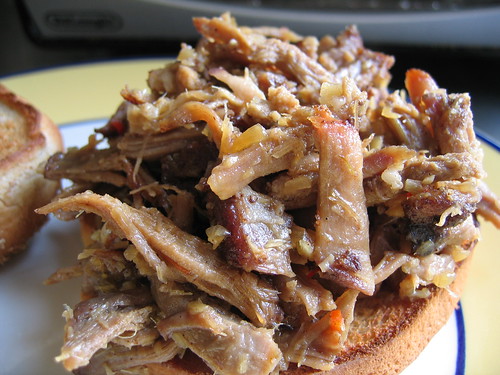 Pork. Lust after it it. Loathe it. Slather your hands in its fat. Hurt its feelings. Hug it. Protest against it. Embrace its oinky charms. Lose sleep over it. The pig is one entity on this green Earth for which we have an indubitably strong feeling, one way or the other. Pork is that magical protein toward which it is simply impossible to hold an ambivalence. I love pork with all of my gastronomic nerves and yet I respect the (somewhat confused) haters. This article is solidly for the swinamorous among us (like that? I just made it up). I received this impeccable inquiry from my friend, Mike a few weeks ago and only today bring myself to a place where my hands are not shaking at the keyboard as I attempt to honor the pig:
Several years ago, you introduced me to a do it yourself Kahlua pork recipe (no fire pit on a sandy beach required). I won't rehash the whole recipe, but it included some Liquid Smoke and several rolls of aluminum foil. Since then it's been one of our favorite entertaining dishes, but I was wondering, do you use that similar cooking technique for any other tasty shredded pork dishes?
Oh, my. Is it getting hot in here or is it just me? Must. Keep. Steady. Hands. Mike, I sincerely appreciate your question, though it is a difficult task to tie me down right now. There are so, so many delicious answers, it is quite difficult to pick just one or two from my pork-addled culinary mind. I will, however, do my solemn duty to the HowieCOOK readers and give it the old college try. Without the aid of one of those increasingly popular psychotropic drugs that help you retain focus, I'll squeeze my brain and try to stick with the topic of shredded pork.
I've gone through three distinct shredded pork phases in my life:
Phase 1. Fake bbq to real bbq. In my younger days, when I was spry, I had a beautiful, *2 out of 5 on the effort-scale* technique for oven "barbeque" for lack of an outdoor space worthy of actual smoke-cooking. Bone-in pork shoulder, soy sauce, salt and liquid smoke rubbed, banana-leaf wrapped, foil sealed, oven roasted on 300 for 5 hours. Wham. As I aged (neither modestly nor terribly gracefully), my house grew taller and my lot grew bigger. I had finally obtained such outdoor space worthy of a can smoker. We purchased a Weber silver bullet for the back patio and have had a scrumptiously grand time of it, smoking pork shoulder, ribs, brisket, fish, chicken, etc. I must admit, there is just something attractively primal about mixing the element of fire with the element of hunger. mmm.
Phase 2. Real bbq to why bbq. Alas, sometimes smoking meat painfully becomes a *4 out of 5 on the effort-scale* technique, adding wood, adding liquid, stoking, rinse, repeat... It's not for the faint of heart. This is why folks naturally get the perception that barbeque, particularly the lovely, time intensive pulled pork is something you order in or go out for. In honesty, I've used the valid excuse of too-rainy-to-bbq quite frequently and drifted back to the kicka$$ oven technique from time to time. After all, it does produce a wonderful shredded pork; and it's a great deal more accessible, though still time intensive, nearly impossible to screw up. Yes, even for you. You know who I'm talking to.Phase 3. why bbq to no bbq. Please, bbq fans, stop plotting to kill me. I still love me some bbq. However, I have to tell you and the rest of the ravenous audience the ugly but terribly tasty truth: If you want to shred pork, flavorful, savory yet subtly sweet pork, there is no better method than braising. There. I said it. Pause while I hide from the throngs of pitch fork wielding pit masters outside my window. . . . . . . .AAAAAAAAHHAFFGGGGG!!#@#!@!!$@#$ Just kidding. Back now. Braising pork shoulder on a very low temp for a very long time produces a succulent, moist shred full of oinky goodness. Braising is low-to-no work for the cook and the results could give the bbq intelligentsia a run for their money.
Where smoking meat does present a lovely bouquet, it does not tenderize the meat as much as braising. When intramuscular collagen in the meat breaks down, it liquifies and helps to moisturize the surrounding muscle tissue. This occurs during smoking as well. BUT, during braising, you get a bonus effect: If an acid is present in the cooking liquid, it helps to move the melting along and simultaneously tenderizes the muscle tissue. Broken down muscle tissue in the presence of melting fat means the muscle can draw in moisture, rather than just get wet.
Guiltily gilding the lilly, reintroducing the pork, once shredded, back into the braising liquid is flat out decadent. This stupendous model for shredding pork is actually quite common around the globe, but there are two examples that make me cry with anticipation: Chile Verde from Mexico and Red Cooked Shredded Pork from China. The process is the same for both but the liquid differs.
Method
Technically, the way I do it, it's not really braising. I know, I know, I've been talking about braising this whole time. I just like the word. Braising is the process of searing meat, then slowly cooking it in a flavorful liquid. I tend not to sear the meat, making my process, technically poaching. No one's going to drool over poached pork. Not terribly sexy. SO...
1. Bring your braising liquid to a boil over high heat in an oven proof, coverable pot then turn off the stove.
2. Gently lower the pork shoulder into the liquid.
3. Pop the pot into a 300 °F oven, covered.
4. Forget about it for 5 hours.
5. Remove the pot from the oven, remove the cover.
6. Remove the shoulder with a slotted spoon, gather meat together in a big bowl.
*This may require two slotted spoons to lift the whole shoulder. But, more likely, once you dig in with one spoon, meat will just begin to fall apart and one spoon becomes enough.
7. Once you have as much of the meat as you want, start shredding with two forks.
8. With a non-slotted spoon, add some of the cooking liquid from the pot to the pork to combine.
You're done. That's it. Go make friends.
Liquid Options
Though I present some suggested liquid paths below, you can truly go nuts with braising pork by keeping a basic model in your head: stock or water + acid + flavor. The acid can be a vinegar, citrus juice, relatively acidic booze, etc.
For Howie's Mexican Chile Verde:
(puree the following in a blender or processor)
2 lbs tomatillos, husked, broiled in the oven for 7 minutes
1 bunch cilantro, washed
3 jalapeño peppers, stem removed, seeded
3 poblano peppers, stem removed, seeded
6 cloves garlic, whole
1 medium sized onion
juice from three limes
1c orange juice
4-6c chicken or vegetable stock
For Howie's Red Cooked Shredded Pork
(Do not puree the following, trust me)
1c soy sauce
1/2c Chinese black vinegar or balsamic vinegar if boring and/or desperate
1c Shaoxing wine (get it here) or be dumb and use dry sherry
4-6c of chicken or vegetable stock (Chinese stock would be best)
1/4c brown sugar or 2 big hunks of rock sugar
6 cloves garlic, whole
2 three inch fingers of ginger, unpeeled, lightly smashed
7 scallions, cut in half
2 star anise
2 cinnamon sticks
What's that you say? What do you do with he pork once it's shredded? Here's a start...
Sandwiches
Omelets
Rice bowls
Tacos
.
.
.
Don't make me go on and on and on. Just eat it. Done.

To submit questions to HowieCOOK,
send email to
HowieCOOK@gmail.com
Monday, April 13, 2009
BA DA BING, Shaoxing glazed eggplant
 Hello HowieCOOK fans. My last two posts left you hanging and left me thinking: What would be the perfect result when the Purple Provocateur (that's my fancy name for eggplant) and Chinese rice wine were on a collision course? Think: You got your Shaoxing wine on my eggplant. No! You got your eggplant in my Shaoxing wine! And, so on. Well, finally I offer you the recipe that has all the blogosphere a buzzing. Or, is that the native buzzing in my head? Whatever the clinical case may be, I give you...
BA DA BING!
Grilled pork-stuffed eggplant cakes with a Shaoxing rice wine glaze
(Start this recipe 75 minutes before you want to eat.)
In Mandarin Chinese, Ba means eight, Da means big, and Bing means cake. Ba Da Bing or Eight big cakes is my interpretation of super-stuffed Chinese eggplant cakes on the grill, made shiny and sweet with a unique rice wine glaze. Why eight? The Chinese feel that eight is a very lucky number and if you follow the letter of the recipe, and make expected mistakes the first time, you should still yield eight nicely sized cakes for each eggplant you use!
SHOPPING NOTE: Buy the widest eggplant you can find, so that when you slice them in rounds, the cakes won't likely fall through the grates of your grill. Do not use typical, huge Globe eggplants for this recipe. The skin is terribly thick and there usually are too many seeds. Also, shop at a farmers market or a local farm store to buy fresh, sweeter, less brittle eggplant.
Glaze
1 1/2 C - Shaoxing wine or dry sherry
1/2 C - Light brown sugar
1/2 C - Soy sauce
1 clove - Garlic lightly smashed but still one piece
Eggplant
2 - Chinese or Japanese eggplant, cut between 1/8 and 1/4 inch inch round slices
Filling
1 lb - Ground pork
1 Tb - Shaoxing wine or dry sherry
1 - Egg white
1 Tb - Soy sauce
1 lg. clove - Garlic minced
1/2 Tb - Ginger minced
1 Tb - Scallion, white part minced
1 tsp - Table salt
1/2 tsp - White pepper
1 tsp - Granulated sugar
2 Tb - Corn starch or tapioca starch
Start by mixing your glaze ingredients together. In a small sauce pot over no heat, whisk up the Shaoxing or sherry with the brown sugar, soy sauce and garlic. Once combined, up the heat to high. Once you see an active bubbling, lower the heat back to medium-high, let the mix reduce until it has a wet pancake syrup consistency, about 15 min. Then, remove the garlic and set the glaze aside, off the heat.
Mix together your filling ingredients in a bowl. The mixture will appear to be wet and somewhat sticky. This is a good thing. You will soon want the filling to stick to the insides of a rather dry eggplant slice. If the mix appears to be too wet (read: runny), add some more of the starch until it resembles a loose burger patty.
Begin to assemble little eggplant "burgers" with eggplant as the top and bottom bun and about 2 tsp of filling as the burger. As you finish each stack, place on a parchment lined sheet pan. As you assemble, be sure to press the top layer of eggplant to assure that the filling is spread inside as far as it can be without falling out the sides. Once this step is done, refrigerate for 30 minutes. You could refrigerate, covered up to 48 hours before grilling.
Fire up the grill to medium-high. Allow the grill to heat, with the lid closed for 5-10 minutes. On the sheet pan, with a paint brush, pastry brush, or the back of a spoon if you are desperate, spread glaze over the top side of the eggplant cakes. With a long set of tongs, carefully place the cakes onto the grill, glaze side down. Leave some room in between the cakes for easy grabbing later on.
Glaze the now-up-side of the cakes. Close the grill lid. The eggplant should cook for 3-4 minutes on the first side. Open the lid, re-glaze the up-side of the cakes. Carefully turn over each cake individually. Re-glaze the now-up-side of the cakes and close the lid. After about 3 minutes of cooking the second side of the cakes, open the lid and carefully remove the cakes from the grill, placing the cakes in one layer on the sheet pan. Serve along side the extra glaze in a bowl and a heaping, steamy bowl of white rice, y'all.
Ah.

To submit questions to HowieCOOK,
send email to
Tuesday, April 7, 2009
Get Drunk in China

...Wait, before you think me a sot, or a mere advocate for Asian debauchery: Get Drunk in China is a terrific yet no-longer-running television show that explored the finer points of lively suppers in the Middle Kingdom. It featured an actor I know named Jimmy Taenaka, or "Jimmy T." Jimmy would pounce from city to city, joyfully investigating the local grain and fruit spirits as well as regional beers. When I told my friend and long-time China companion, Greg (happy China photo above) about the show's title and to Tivo it, he thought it was a gag. Simply brilliant title. So, I thought I would borrow it to draw your attention. Now that I have that, my friend Paul has a question that relates:
Other than the heavily marketed Tsing Tao beer, we don't get to see a lot of Chinese alcohol. What's good, and do you have any advice on what's a good compliment to my entree?
Though many folks who have been to China (even some sinophiles) would flog me for saying, there are many Chinese spirits that are perfectly suited to pair with a nice Chinese meal. Off the top of my head, I can think of two spirits that go down smoothly and compliment or follow foods ranging from tangy and sweet to hot and spicy. One is bai jiu and one is huang jiu, or white liquor and yellow liquor respectively.
Bai jiu, is primarily made from distilled sorghum. Some Chinese argue that sorghum-based bai jiu is only true bai jiu. In some Southern cities, bai jiu may be made from other grains, including rice, millet, and corn. It generally has a proof between 80 and 120 (40% and 60% alcohol). The more pleasant sips are from those of lower alcohol and therefore higher flavor and price. I could regale you with stories of the "cheap stuff" and how it encourages hopping over 9 foot University gates and lighting innocent coffee tables ablaze with elderly Japanese professors, but I digress.
Except for beer, baij jiu is the most commonly served booze across China. It is frequently mis-translated (alas, China) as white wine. This is quite often the beginning of a horrible relationship between an unsuspecting foreign guest and bai jiu. It is decidedly not wine, as we would so innocently interpret. Indeed, it is as much wine as wine is water. For most China visitors who hear "enjoy some local white wine," bai jiu is the closest thing to fire-water that one can imagine. Bam. Relationship crushed. Chinese liquor is horrible is all that remains in the mind. All because the word wine was misused and utterly abused.
I've heard bai jiu referred to with such color as "white lightning," "goddam vulgar," "why-oh-why would you do this to me," and so on. My otherwise brave buddy Greg's take is, "there are no words, maybe blech." I am here to proclaim: If one is introduced to Chinese liquors in a kinder, gentler fashion, without playing victim to the white wine phenomenon from above or a college-like dare, there can be an impending gastronomic adventure for the soul. On a related note, Taoist monks on remote Chinese mountain tops believe that bai jiu helps with immortality.
The right way to drink: I once threw a Chinese dinner party that ended with sips from a very fine bottle sent from a friend in China. My guests were surprised, generally pleased, and astounded that they had never considered Chinese spirits before. Yes, some did not like it, but then again, some of you out there have a love/hate thing with tequila, no? I believe the key to introducing a surprising liquor is to match it well with the food you're serving. This feast, in particular was full of starchy notes, corn flour, crushed rice, wheat pancakes, etc. Bai jiu, being distilled from similar grains, plays well with this set of thickening agents. It imparts an almost lightening feeling after the meal.
Huang jiu differs from bai jiu in that it is aged and primarily made from rice or wheat. Like any alcohol that is aged, sugars are given time to develop and alcohol level has time to calm down. Huang jiu, is therefore sweeter and mild in comaprison to it's "Quien Es Mas Macho?" white cousin. Huang jiu, though called yellow, typically ranges from light amber to dark rust in hue and has an alcohol content of less than 20%. Similar to western-style grape wine, huang jiu has a taste spectrum from dry to sweet. For true enthusiasts (or one who wants to pose as an enthusiast), huang jiu can be enjoyed warmed to temperatures well above room temp, say 100°F. Not unlike a snifter of cognac, warmed huang jiu will be a pleasure for the nose as well as the tongue.
Unlike bai jiu, huang jiu - specifically Chinese rice wine - has been gaining in international popularity and showing up in culinary and mixology realms of late. It has that exotic Far East appeal and in my opinion deserves a spot at the digestif menu next to the finest bottles of Napa Valley sherry and Japanese sake. China has recently become a big deal and many things authentically Chinese should be working their way into the mainstream. Two highlights: 1) My neverending quest to have you all not settle for Chinese food as simply fast, cheap, and convenient! It is an misunderstood artform, dag nabbit; and 2) Last year, a buddy of mine named Scott in Portland, Oregon started to import and sell super-fine Chinese rice wines (http://www.chinesericewine.com/). Now you don't have the can't-afford-a-plane-ticket excuse!
Paul, thanks for the question. I gave you much more than you bargained for! Though seemingly exotic, Chinese liquors are no more strange than some single malt scotches that I've enjoyed. If it's properly introduced on its own, as a part of a larger meal, I think that there is a chance that Chinese liquors will see a tremendous future in the Western world. Sort of like Japanese sake after World War II...only minus the war part!
Tune in tomorrow for the exciting conclusion of Get Drunk in China, where I give you my favorite recipe that involves Shaoxing wine as a luxurious glaze to little pork-stuffed eggplant cakes. Drool in wait.

Other than the heavily marketed Tsing Tao beer, we don't get to see a lot of Chinese alcohol. What's good, and do you have any advice on what's a good compliment to my entree?
Though many folks who have been to China (even some sinophiles) would flog me for saying, there are many Chinese spirits that are perfectly suited to pair with a nice Chinese meal. Off the top of my head, I can think of two spirits that go down smoothly and compliment or follow foods ranging from tangy and sweet to hot and spicy. One is bai jiu and one is huang jiu, or white liquor and yellow liquor respectively.
Bai jiu, is primarily made from distilled sorghum. Some Chinese argue that sorghum-based bai jiu is only true bai jiu. In some Southern cities, bai jiu may be made from other grains, including rice, millet, and corn. It generally has a proof between 80 and 120 (40% and 60% alcohol). The more pleasant sips are from those of lower alcohol and therefore higher flavor and price. I could regale you with stories of the "cheap stuff" and how it encourages hopping over 9 foot University gates and lighting innocent coffee tables ablaze with elderly Japanese professors, but I digress.
Except for beer, baij jiu is the most commonly served booze across China. It is frequently mis-translated (alas, China) as white wine. This is quite often the beginning of a horrible relationship between an unsuspecting foreign guest and bai jiu. It is decidedly not wine, as we would so innocently interpret. Indeed, it is as much wine as wine is water. For most China visitors who hear "enjoy some local white wine," bai jiu is the closest thing to fire-water that one can imagine. Bam. Relationship crushed. Chinese liquor is horrible is all that remains in the mind. All because the word wine was misused and utterly abused.
I've heard bai jiu referred to with such color as "white lightning," "goddam vulgar," "why-oh-why would you do this to me," and so on. My otherwise brave buddy Greg's take is, "there are no words, maybe blech." I am here to proclaim: If one is introduced to Chinese liquors in a kinder, gentler fashion, without playing victim to the white wine phenomenon from above or a college-like dare, there can be an impending gastronomic adventure for the soul. On a related note, Taoist monks on remote Chinese mountain tops believe that bai jiu helps with immortality.
The right way to drink: I once threw a Chinese dinner party that ended with sips from a very fine bottle sent from a friend in China. My guests were surprised, generally pleased, and astounded that they had never considered Chinese spirits before. Yes, some did not like it, but then again, some of you out there have a love/hate thing with tequila, no? I believe the key to introducing a surprising liquor is to match it well with the food you're serving. This feast, in particular was full of starchy notes, corn flour, crushed rice, wheat pancakes, etc. Bai jiu, being distilled from similar grains, plays well with this set of thickening agents. It imparts an almost lightening feeling after the meal.
Huang jiu differs from bai jiu in that it is aged and primarily made from rice or wheat. Like any alcohol that is aged, sugars are given time to develop and alcohol level has time to calm down. Huang jiu, is therefore sweeter and mild in comaprison to it's "Quien Es Mas Macho?" white cousin. Huang jiu, though called yellow, typically ranges from light amber to dark rust in hue and has an alcohol content of less than 20%. Similar to western-style grape wine, huang jiu has a taste spectrum from dry to sweet. For true enthusiasts (or one who wants to pose as an enthusiast), huang jiu can be enjoyed warmed to temperatures well above room temp, say 100°F. Not unlike a snifter of cognac, warmed huang jiu will be a pleasure for the nose as well as the tongue.
Unlike bai jiu, huang jiu - specifically Chinese rice wine - has been gaining in international popularity and showing up in culinary and mixology realms of late. It has that exotic Far East appeal and in my opinion deserves a spot at the digestif menu next to the finest bottles of Napa Valley sherry and Japanese sake. China has recently become a big deal and many things authentically Chinese should be working their way into the mainstream. Two highlights: 1) My neverending quest to have you all not settle for Chinese food as simply fast, cheap, and convenient! It is an misunderstood artform, dag nabbit; and 2) Last year, a buddy of mine named Scott in Portland, Oregon started to import and sell super-fine Chinese rice wines (http://www.chinesericewine.com/). Now you don't have the can't-afford-a-plane-ticket excuse!
Arguably, the most famous Chinese rice wine is from the town of Shaoxing and has adopted the name. In addition to being enjoyably imbibed, Shaoxing wine is also used obsessively in cooking. At the level you would find white wine being used to fortify sauces and marinades in the French kitchen, or red wine used to brighten up Italian cuisine, Shaoxing wine is seldom left lonely next to the Chinese stove. In fact, there is an entire sub-school of cookery that proudly places Drunken meats and other ingredients in center stage. As booze tends to do, Drunken marinades denature proteins and tenderize muscle tissue. This makes for faster cooking, thereby saving scant fuel resources. Shaoxing wine marinades do double duty and also impart a sweet, sometimes woody or smokey flavor to the dish.
The right way to drink: Shaoxing wine pairs excellently with earthy and seafaring flavors and those with a decidedly salty finish. The sweet notes of the rice wine provide a terrific counterpoint to balance out the palette. If I am serving a warmed bottle of Shaoxing wine to finish off a banquet, you can be sure that I also used Shaoxing as described above in the marinades and sauces. This tactic would cause a theme in the meal and make the transition to a new type of liquor almost eerily familiar.
Paul, thanks for the question. I gave you much more than you bargained for! Though seemingly exotic, Chinese liquors are no more strange than some single malt scotches that I've enjoyed. If it's properly introduced on its own, as a part of a larger meal, I think that there is a chance that Chinese liquors will see a tremendous future in the Western world. Sort of like Japanese sake after World War II...only minus the war part!
Tune in tomorrow for the exciting conclusion of Get Drunk in China, where I give you my favorite recipe that involves Shaoxing wine as a luxurious glaze to little pork-stuffed eggplant cakes. Drool in wait.
To submit questions to HowieCOOK,
send email to
HowieCOOK@gmail.com
Wednesday, April 1, 2009
Purple Provocateur
 It's a fruit! It's a veggie! Shut up, it's a fruit. Technically, it's a berry. It's first cousins with the tomato and second cousins with the potato. It gets its name for its shape and it's (originally cultivated) glossy white skin. Hailing from the Indian subcontinent and weighing in at "heavy for its size," it's the Purple Provocateur...Heeeeerr'e's E G G P L A N T !! This inquiry comes from my friend, Carrie. She writes:
I'm obsessed with Eggplant and have yet to find a reliable, non-time-consuming trick to cooking eggplant (preferrably stir fried or braised) that will 1) retain the gorgeous bright purple color, 2) will prevent it from absorbing all the oil from the pan and 3) can be done in a home kitchen with an electric stovetop. Please help!
Not to harp on the theme of hatred (steak, mushrooms, corn, cucumbers, blech), but I, like many of you out there, hated eggplant as a kid. However, when I moved to China (not to harp on the theme of China), eggplant and I began a very special relationship. I fell in love. It may have been the dream-like haze (read: smog) of China, the different, sweeter genre of eggplant grown, or just the sheer variety of dishes, I was newly in love with eggplant, nonetheless.
There, I found dozens of masterful methods to prep an eggplant. Fried, grilled, steamed, baked, stuffed, roasted, sauteed, breaded, pureed, stewed, braised; I could go on. It is simply provocative what a typical Chinese chef can do to such a humble piece of purple produce. My childhood aversion had no choice but to melt away when faced with such gastronomic pleasure. Today, I'll eat eggplant in any form, just had to get to know her better.
Now then, In answer to Carrie's concerns:
Keeping eggplant purple...The purple color of eggplant comes from anthocyanins and chlorogenic acids, also present in green veggies along with chlorophyll. Just as you would blanch broccoli in water to cease enzymatic action on the outside and draw chlorogenic-activating gases from the inside, the same works for the royal hue of an eggplant. Yet, eggplant skin reacts to the oxygen in water differently than a more porous veggie. It goes dull and rather gray in hot water.
Oil blanching eggplant works like a charm. Dipping cut eggplant into hot (say, 300 degree F) light oil for about 30-45 seconds seizes the skin and draws magical gases from within the flesh that support vine ripe color. Bright. Purple. Gorgeous.
Preventing it from absorbing oil...You've now read the info above and are very concerned about eggplant soaking up all of that oil from blanching to improve color, right? Eggplant can absorb oil, but it doesn't have to take in alot. Make sure you have a fresh eggplant with few-to-no seeds. This will reduce your desire to listen to outdated cookbooks and celebrity chefs and salt your eggplant! This controversial tactic has been bantered about for eons as a way to get bitter water out of the eggplant. In my not-so-humble opinion, it does more harm than good.
If you are using a fresh, firm eggplant with few-to-no seeds, you don't have to get anything out. Let's do the math, here. If you leave water inside eggplant, then cooking processes heat up the internal water and effectively steams the flesh from the inside. This same water also prevents some oil absorption. Alternatively, if you take out the water by salting, then you leave your eggplant vulnerable like a sponge, waiting for oil to be around. Soggy. Eww.
As a bonus, here are a few pearls of HowieCOOK wisdom about the Purple Provocateur:
- On good-for-you: Eggplant, despite numerous sourpuss nutritionists' initial thoughts, it cuts cholesterol, is rich in antioxidants, fiber, vitamins and minerals, has skin that contains a phytonutrient that makes it an official brain food, and aids in digestive processes, i.e. it will keep you regular. Yes, I said it.
- On breeds: It comes in many shapes and sizes. Though there are the ultra-cool graffiti kind with striped skin, the flavorful Indian kind that are small and dark, the Japanese white kind that look shocking, the most popular in our grasp are typical Italian globe eggplant and Chinese eggplant. If you don't like thick skin and high-bitterness-potential, go for the Chinese, longer, thinner, lighter purple kind.
- On bitterness: it is not characteristic of all people, so why should it be one of all eggplant? Sure, there are bitter eggplants out there, but you can avoid them pretty easily. This is very important, since bitterness is the #1 reason haters hate eggplant. Seed volume causes this bitterness, and seeds over-develop in over-ripe or overly large eggplant. The fresher the eggplant, the fewer the seeds the sweeter the flesh.
- On buying: Eggplant should feel heavy for its size, and have glossy, uniformly smooth skin with no blemishes. When you buy an eggplant from a big grocery store, chances are the eggplant has been sitting in cold storage for weeks. So, even though an eggplant seems to be fresh, smooth and heavy, it may still be over-ripe and bitter given the info in #3. Buy from farmers markets. Eat green. Be a locavore. Wear Birkenstocks. Blah, blah, blah.
- On Jersey: New Jersey gets a lot of crap from just about everyone. I grew up in NJ and find it to be a great state. Terrific beaches, decent surf, and NJ provides Hollywood with one of the most salient stereotypes for Mafia casting. I digress. NJ is the third largest producer of eggplant in the US. 8000 tons/year. Respect.
- Yu Xiang Qie Bing - Chinese - Deep-fried, meat-stuffed eggplant cakes with a garlicky sauce
- Baba Ganoush - arguably Lebanese - Roasted eggplant mashed with garlic, lemon juice, sesame paste, olive oil
- Eggplant Parmesan - Italian - My little grandmother and her sister used to fight over leaving the skin on. I take it off!
- Zha Qie Tiao - Chinese - Like eggplant french fries.
- Baingan Bartha - Indian - Roasted eggplant mashed with tomato, onion, peas, chiles, garam masala, cilantro

To submit questions to HowieCOOK,
send email to
Thursday, March 26, 2009
Hey Vegan, Eat Me!
 My name is Tofu. I live on the second floor. I live upstairs from you. Yes, I think you've seen me before... Tofu has been abused, misused, confused and otherwise been refused. I get it. Tofu is weird. It's the golden palace of pleasure for vegetarians, blah, blah, blah. I have a terrific question from a good nonvegetarian friend, Jay and his wife, Stacey that will lend itself to mellowing any trash-talk about bean curd:
What are some great, flavorful ways to prepare tofu? Jay and I have tried recently (in our quest to eat more healthful dinners) but everything has turned out bland.
Tofu gets a bad rap. First, I must admit, there are foods that I do not like: mushrooms, cucumbers, corn, to name three all-stars. Wait! Before you start to hurl burning hot recipes at me with mushrooms, cucumbers and corn - I'm simply making the point that sometimes, people just don't like stuff. That's OK. It's natural. That said, however, if you can do to my least favorites what I am about to do to tofu, I'm all ears.
The Chinese (oh, here he goes, again). Stop it, internal dialogue! The Chinese invented tofu and truly exploit all of its attributes, but more on that down the page. Tofu is soy bean curd, essentially coagulated soy milk. Though the term coagulated has you pondering running away, never to read HowieCOOK again, hold up! Cheese is also coagulated milk, albeit the kind from cows, sheep or goats. We love cheese, so get over it and let the soothing words of HowiCOOK lull you into a comforting tofu haze.
Though you will mainly find a block of silken tofu or firm tofu in your local grocery store, there are a number of interesting commercial processes that tofu may go through which changes its character completely. It's worth some exploration on your own. If you have an international foods market in your 'hood, you may find two of my favorites, smoked tofu or pressed tofu.
Smoked tofu loses almost all of it moisture while smoking and, not unlike meat or fish, will smack of the flavor of the chosen smoking wood. Sliced in green salads, it adds a unique texture component. Most Chinese smoking processes use rice, tea, and peach or apple wood. Pressed tofu also has almost all of the moisture removed. The result is similar to and can easily sub-in for pasta.
For the moment, let's assume that you either do not have a local international market or do not have access to vast global market called the internet (I love writing things like that in a blog). You're happily stuck with the brick of silken or firm tofu. Silken is the softest type of fully formed tofu and has a texture reminiscent of quiche. Firm tofu has been further dried. It's a more crumbly form, which can be a drawback for some preparations.
When one is using tofu in this most commonly found brick form, it holds three characteristics that make it not a replacement for meat, but an ingredient with its own value! I'll just become a vegetarian and grill this here tofu brick instead of a steak tonight. N.O.
Brick tofu is a tremendous vehicle for flavor. It is bland on its own. Strong dressings, sauces, marinades all play well with the flat tofu taste. Again, do not think of cooking with it as using tofu instead of meat to be more healthy. There is a better reason. Since tofu is a reliable vehicle, make it a great flavor counterpoint! Go bold with seasoning, up the spicy, up the sweet, up the sour. In this way, one bite of a sauced-up tofu may result in a phenomenal punch, then a smooth, creamy middle, then a spicy back-end.
Tofu is about texture, not taste. Mouthfeel is its strength. Yes, mouthfeel is a technical term, and no, I did not just make up for you. What does it feel like to chew? Does it fill your mouth? Where does it meet up with your tongue? Is it creamy and smooth or gritty and sharp? Is there an aftertaste? Mouthfeel is often talked about in wine and cheese circles, but I believe it answers for alot of tofu's appeal. In essence, try to see tofu as a texture component in the larger dish.
One really cool thing that can be done with brick tofu (here, I prefer to use firm) is freezing it. Frozen tofu? Now tofu is for dessert? Well, it could be, but that's another entry for another day! Freezing and then thawing a brick of tofu enables it to absorb flavors much more readily. Off the grocery store shelf, there are bits of moisture (almost 100% water) dispersed throughout a brick of tofu. When tofu freezes, the moisture pockets expand.
When you then allow the tofu to thaw slightly and slice it, you will notice that the inside becomes sponge-like. Yes, like a kitchen sponge. It can then pick up big flavors in soups, sauces, dressings, etc. One thing to remain aware of, however, is that by expanding the tofu you are also lessening its structural integrity. Picture yourself getting tackeld with your arms and legs spread wide. It gets more pliable and therefore more fragile.
My advice is this: Take your tofu out of the liquid-filled, ubiquitous plastic tub with plastic seal on top. Drain the brick on top of some paper towels. Put some paper towels on top as well. If you feel like you can gently press it without breaking it up, do so. If not, just let the tofu sit and drain for a half hour. Once it is relatively dry, place the brick alone in a zip-top freezer bag. Do not try to get the air out of the bag, as the tofu needs room to expand a slight bit.
Freeze it for 4 hours or all night. When you take it out of the freezer, the tofu will have gotten darker in color. It's OK! This is natural and does not mean it went bad! Let the tofu sit in its bag for 15-20 minutes to thaw slightly. Slice or dice for use.
Below is a very, very simple recipe for Frozen Tofu with Spicy Sesame Dressing. For those of you who "do not like tofu," this dish presents tofu in a way that most of you have never seen and completely changes its texture - the main culprit in most of our food aversions! Ironically, it fits as a nice side dish to grilled steak...
Frozen Tofu with Spicy Sesame Dressing
1 - brick of firm tofu, frozen, thawed, sliced 1/4 inch thick
5 C - vegetable or chicken stock
dressing
6 Tb - sesame paste or tahini
6 Tb - soy sauce
3Tb - water
2 Tb - sesame oil
1 tsp - rice vinegar
1 tsp - sugar
1 or 2 tsp - red chili pepper flakes (depends on how hot you want)]
(Assuming you have already frozen your tofu for at least four hours, thawed for a 15 min. and sliced) Start this recipe 20 minutes before meal or snack time. Heat up the veg or chicken stock over high heat in a medium sauce pan. Once the liquid begins to boil, lower the heat to a simmer. add your frozen tofu slices.
Do not move the tofu around in the stock! Resist the mighty pasta urge to swirl the whole thing up. Remember that by freezing then simmering, you are causing the tofu to go fragile. Simmer without touching for 8-10 minutes over low heat. While the tofu is simmering, whisk together all dressing ingredients. If the mixture is too thick, do not hesitate to add a bit more (equal parts) water and soy sauce. You're seeking the thickness of ranch dressing.
Set up a large plate or cookie sheet covered in paper towels. With a slotted spoon or a slotted spatula, gently gently gently remove the tofu slices, one by one, placing them in one layer onto the plate or cookie sheet.
Once you have them all removed from the pot and drained, plate up and drizzle or pour the sesame sauce over to coat and serve. Done.
Jay and Stacey, I hope you enjoy. The rest of you vegetarians and vegans out there, you're welcome, and all of you tofu-hating confused people, let me know how this changed your life.
To submit questions to HowieCOOK,

send email to
HowieCOOK@gmail.com
Subscribe to:
Comments (Atom)


